

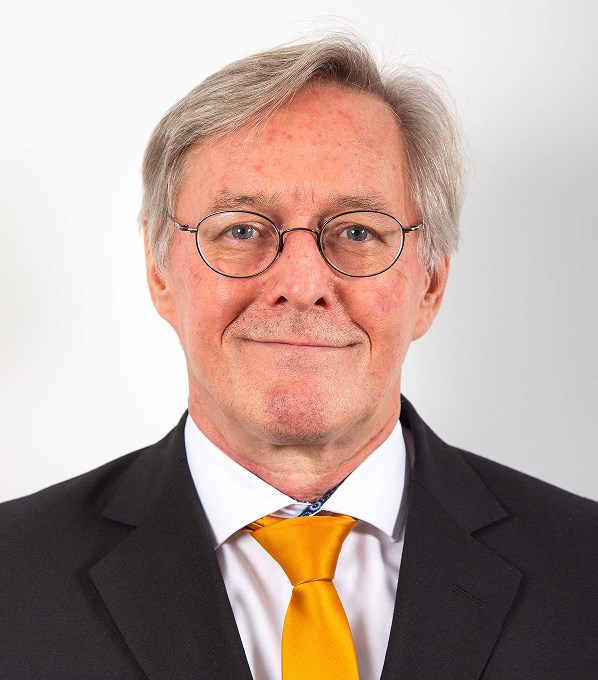
Klaus Holschemacher
Professor, Leipzig University of Applied Sciences (HTWK Leipzig)Structural Concrete Institute (IfB), Germany
Speech Title: Distributed Fibre Optic Sensing – An Innovative Technique for Monitoring of Building Structures
Abstract: The preservation of existing buildings is a task whose importance is increasing worldwide. Through appropriate long-term monitoring, it is possible to obtain information about existing conditions of buildings. By analysing the collected data, significant changes can be detected in a timely manner offering the basis for development of effective maintenance or strengthening measures.
There are many different monitoring techniques available, differing in their technological basis. Distributed fibre optic measurement systems based on Rayleigh and Brillouin scattering offer many advantages in comparison to other monitoring technologies. They enable strain measurement in a maximum measurement range of up to 50 m to 100 m (Rayleigh scattering), respectively 50 km to 80 km (Brillouin scattering). In case of low measurement range, the spacing between neighboured measurement points is less than 1 mm, resulting in a quasi-continuous strain measurement over the entire sensor length.
Distributed fibre optic sensors (DFOS) consist of an optical fibre, mostly glass fibre, that is protected by cladding and coating. DFOS are usually fixed at the surface on construction members. But it is also possible to arrange DFOS inside of concrete members if they are set in position during the casting process of fresh concrete.
The accuracy of the strain measurement is influenced by the bond between the DFOS and the contacted construction material. Therefore, a quality assurance concept was developed to ensure the effectiveness of DFOS. Furthermore, a research program was performed to investigate the influence of moisture on measurement results.
With DFOS, a powerful tool for monitoring building structures is available. Numerous practical applications, for example in bridge construction or wide-span roofs, have already proven its suitability.
Keywords: Monitoring, sensorics, maintenance, building structures
Biography: Klaus Holschemacher studied Civil Engineering at the Technical University of Leipzig (TH Leipzig) and has got PhD degree from this university in 1992. Since 1996 he is Professor for Structural Concrete at the Leipzig University of Applied Sciences (HTWK Leipzig). He is the founding director of the Structural Concrete Institute (IfB) and the head of this institution until now. In 2020 he founded the Carbon-reinforced Concrete Lab Germany, a research center for the investigation of automated production of concrete members with non-metallic reinforcement. Holschemacher has successfully applied for research funds with a total amount of more than 12 million €. His main research interests are carbon and textile reinforced concrete, fiber reinforced concrete, hybrid structures, and bond of reinforcement in cementitious materials.
Holschemacher is author, respectively co-author, of more than 400 research papers. He is member of numerous scientific organizations, e.g. fib, ACI, ASCE. Since 2018, he is board member of the German Carbon Concrete Composite e.V. Besides his activities in research, he is working as consulting engineer and as publicly appointed and sworn expert.