
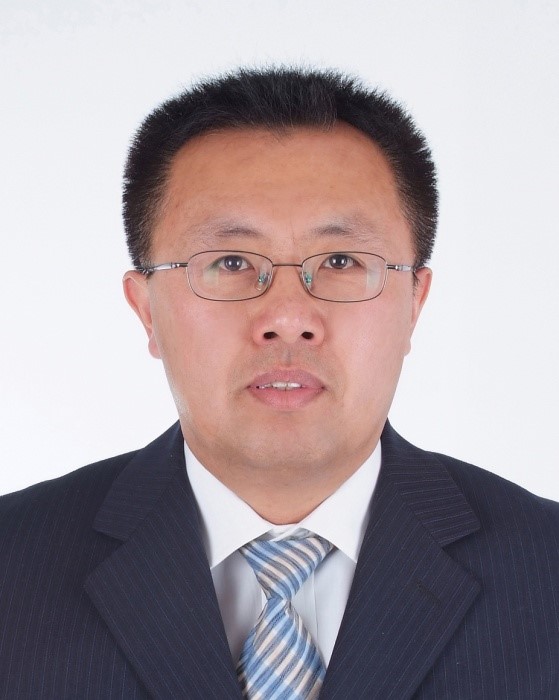
Zhefeng Zhang
Full ProfessorShenyang National Laboratory for Materials Science,
Institute of Metal Research, Chinese Academy of Sciences, China
Speech Title: Achieving the Highest Fatigue Strength in Metals
Abstract: Nearly 90 per cent of service failures of metallic components and structures are caused by fatigue. The improvement of fatigue strength could help to reduce the risk of fatigue failure to engineering structures and human lives, and contribute to lightweight design, thereby enhancing the efficiency of resource use. Despite numerous attempts, scientists and engineers have struggled to make significant improvements in this area. Here we propose four principles for anti-fatigue design of metals, including: 1) high elastic modulus; 2) fine, uniform and stable microstructure; 3) smallest possible inclusion or defects size and 4) optimal tensile properties. Guided by the four principles above, we successfully achieved the highest fatigue strength and specific fatigue strength to date in additive manufacturing TC4 alloy, 2024Al alloy, GCr15 bear steel, cold-drawn pearlitic steel with oriented nano-scale lamellar microstructure and extremely small inclusions, respectively. Consequently, the extremely high fatigue strength achieved by these principles could provide significant guidance for anti-fatigue design of all metallic materials in the future.
Keywords: Tensile strength, fatigue strength, fatigue cracking, Inclusions.
References:
1. Z Qu, Z Zhang, R Liu, L Xu, Y Zhang, X Li, Z Zhao, Q Duan, S Wang, S Li, Y Ma, X Shao, R Yang, J Eckert, RO Ritchie, Z Zhang. High fatigue resistance in a titanium alloy via near-void-free 3D printing. Nature 626 (2024) 999-1004.
2. Z Qu, Z Zhang, R Liu, Z Zhang. Naturally high fatigue performance of a 3D printing titanium alloy across all stress ratios. Sci. Adv., 11 (2025) ady0937
3. Z Xu, X Su, P Wang, P Zhang, B Wang, Z Qu, A Wang, Z Zhang. How high can the fatigue strength of metals be achieved? National Sci Rev., 12 (2025) nwaf332.
4. Wang P, Zhang P, Wang B, Liu XC, Zhu YK, Liu R, Liu Y, Luan YK, Wang P, Li DZ, Ritchie RO, Zhang ZF. The highest fatigue strength for steel. Acta Mater., 289 (2025) 120888.
5. Z Xu, P Wang, P Zhang, B Wang, Y Liu, Y Luan, D Li, R Ritchie, Z Zhang. Fatigue strength optimization of high-strength steels by precisely controlling microstructure and inclusions. J Mater Sci Technol., 230 (2025) 165-176.
Biography: Zhefeng Zhang, Professor in Institute of Metal Research (IMR), Chinese Academy of Sciences (CAS), Shenyang, China. He received Bachelor and Master degree in 1992 and 1995 from Xian Jiaotong University; and obtained his Ph.D. degree from IMR, CAS in 1998. From 2000 to 2001, he worked at the National Institute of Advanced Industrial Science and Technology, Japan as a JSPS fellow. From 2001 to 2002, he worked with Profs. L. Schultz and J. Eckert at Institute for Metallic Materials, IFW-Dresden, Germany as an Alexander von Humboldt research fellow. In 2003, as a visiting scientific professor, he worked at Max-Planck Institute of Metal, Stuttgart, Germany. He assumed full professor in IMR, CAS, Shenyang in 2004. Now, he is the President of the Chinese Fatigue Society (CFS). His research focuses on the mechanical properties, specifically associated with the fatigue and fracture behaviors of metallic materials. Now, he has published more than 800 SCI papers, including Nature, Science, Nature Mater, Prog Mater Sci, Adv Mater, Phys Rev Lett and Acta Mater, with more than 35000 citations.
More speakers will be updated…